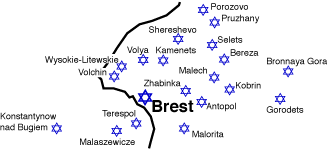
Also: Divin, Drogichin, Khomsk, Malech, Telechany
Sorry, the item you requested
br/Vysokoye/Tenenbaum/memoir-2.i.htmlcannot be found.
This problem is almost certainly due to one of the following:
• The link you used is incomplete. Maybe you or someone else copied only a portion of the correct, complete link. Try to find the complete link or search in the Table of Contents at left for a relevant entry. If this fails, please record what you see in red above and report it to the webmaster for help in locating the material.
• You are using a bookmark that you recorded earlier, or a link on another web site, and it is no longer valid. Try this: look for the material you are seeking by using the Table of Contents at left. If this fails, please record what you see in red above and report it to the webmaster for help in locating the material.
• You are navigating within this web site. All such links should be current, so this message indicates our error. Please report the red text above to the webmaster so we can fix this.
• You are snooping around our site looking for opportunities. There is nothing of financial value anywhere on this site. Just historical information. So why bother?
To reach the webmaster: click here. Please briefly describe what you were doing when this problem occurred. If you are linking from another web site, please include the web address of the page where you found the invalid link.
Notes: